Dangerous Wonder
A Field Guide to Everything Worth Knowing
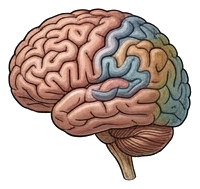
The Human Body
The most remarkable machine you will ever inhabit
Somewhere inside your skull, eighty-six billion neurons are firing in patterns so complex that no supercomputer yet built can simulate them. Somewhere beneath your ribs, a fist-sized muscle has been squeezing without pause since before you were born. Somewhere along the coils of your intestines, a second brain is quietly thinking thoughts you will never be conscious of. The human body is not merely a vessel — it is a civilization of cells, a republic of organs, a metropolitan sprawl of tissue and sinew that has been under continuous renovation since the moment you were conceived. To study it is to study the most densely engineered object in the known universe.


The cerebral cortex alone contains an estimated 16 billion neurons, each connected to thousands of its neighbours by threadlike axons.
The Brain: A Universe in Three Pounds

The human brain weighs roughly 1.4 kilograms — about the same as a bag of sugar — yet it consumes fully 20 percent of the body’s total energy output. Its 86 billion neurons form something on the order of 100 trillion synaptic connections, a number so large it rivals the number of stars in the Milky Way. Each neuron can fire an electrical impulse up to 200 times per second, and a single cubic millimetre of cortical tissue contains roughly one kilometre of wiring.
Grey Matter vs White Matter
The brain’s outer rind, the grey matter, is where the actual computation happens — the cell bodies of neurons, their dendrites, and the synapses where signals leap from one cell to the next. Beneath it lies white matter: the long-distance cables (axons) sheathed in a fatty insulator called myelin, which allows electrical signals to travel at speeds up to 120 metres per second. Without myelin, a signal would take several hundred times longer to cross the brain — a fraction of a second rather than milliseconds. With it, the same crossing takes milliseconds.
The prefrontal cortex — the crumpled sheet of neural tissue just behind your forehead — is the seat of planning, decision-making, and social inhibition. It is the last part of the brain to fully mature, not completing its development until around age 25. This is, neuroscientists gently suggest, why teenagers are teenagers.
Brain Facts at a Glance
- 86 billion — approximate number of neurons in the adult human brain
- 100 trillion — estimated number of synaptic connections
- 20% — share of the body’s total oxygen consumed by the brain
- ~0.2 nanowatts — approximate power consumption of a single neuron; the whole brain runs on roughly 20 watts, about the same as a dim light bulb
- 30–60 ms — approximate time for a signal to travel from the retina to the visual cortex
- 25 years — age at which the prefrontal cortex is fully myelinated
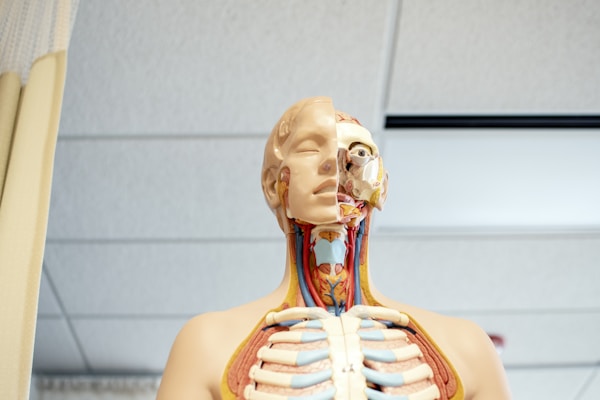
The enteric nervous system lines the full length of the gastrointestinal tract, from oesophagus to rectum.
Your Gut’s Second Brain

Tucked into the walls of your intestines lies a neural network so extensive that scientists have called it the “second brain.” The enteric nervous system (ENS) contains roughly 500 million neurons — more than the spinal cord, and more than the entire brain of many mammals. It operates largely independently of the brain in your skull, controlling the complex muscular contractions (peristalsis) that push food through roughly six to seven metres of winding gut, regulating blood flow to digestive organs, and managing the release of enzymes and hormones.
The ENS produces an astonishing 95 percent of the body’s serotonin, the neurotransmitter most associated with mood and well-being. This is not a coincidence. The gut and the brain are in constant dialogue via the vagus nerve, and the traffic is heavily one-sided: roughly 80 percent of the signals travel upward, from gut to brain, not the other way around. Your stomach has been telling your mind things for your entire life, and until very recently, science barely listened.
The gut produces 95% of the body’s serotonin. Your stomach has been telling your mind things for your entire life.
This bidirectional channel, now known as the gut-brain axis, has reshaped our understanding of everything from anxiety and depression to irritable bowel syndrome and even Parkinson’s disease. Some researchers now believe that certain forms of mental illness may originate not in the brain at all, but in the microbiome — the roughly half a pound (about 200 grams) of bacteria living in the gut, which outnumber the body’s human cells by a factor of roughly 1.3 to 1. You are, in a very literal sense, nearly as much microbe as human.
Did You Know?
If the villi — the tiny fingerlike projections that line the inside of your small intestine — were unfolded and laid flat, they would cover an area roughly the size of a tennis court. This enormous surface area is what allows you to absorb the nutrients from everything you eat. The human body is, among other things, an exercise in hidden real estate.
The Skeleton That Replaces Itself

Your skeleton is not the fixed, inert scaffolding you might imagine. Every seven to ten years, through a process called bone remodelling, your entire skeleton is demolished and rebuilt — cell by cell — from scratch. Two types of cells do the work: osteoclasts, which dissolve old bone, and osteoblasts, which deposit new bone in its place. At any given moment, roughly a million of these tiny construction crews are at work somewhere in your body, dismantling and rebuilding in a continuous cycle that keeps your bones responsive to the stresses you place on them.
This is why astronauts lose bone density in space: without the constant loading of gravity, the osteoclasts keep demolishing but the osteoblasts slow their rebuilding, and the skeleton gradually weakens. It is also why weight-bearing exercise builds stronger bones — the mechanical stress signals the osteoblasts to lay down denser, thicker tissue. Your skeleton is listening to what you do with it.
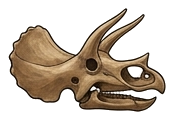
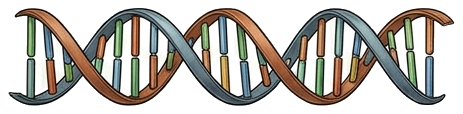
Roughly every ten years, you are walking around inside a completely new frame. The shinbone you had as a child is gone. The ribcage that protected your teenage heart has been replaced, atom by atom. What persists is not the material but the pattern — the information encoded in your DNA, rebuilding the same cathedral from fresh stone, over and over, for as long as you live.
The Skeleton in Numbers
- 206 — bones in the adult human body (babies are born with roughly 270; many fuse as they grow)
- 7–10 years — time for the full skeleton to be replaced through remodelling
- 1 million — remodelling sites active in the skeleton at any moment
- 99% — of the body’s total calcium stored in the bones
- approximately 1 to 1.2 kg — approximate weight of bone the average adult loses and replaces each year
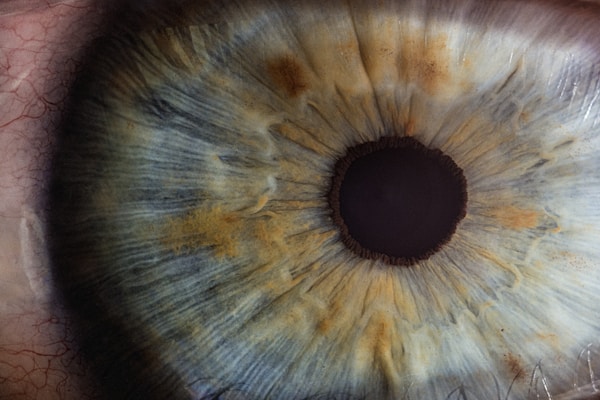
The retina contains roughly 120 million rod cells and 6 million cone cells, each one a tiny photoreceiver tuned to particles of light.
Seeing Photons: The Eye as Particle Detector

Inside each of your eyes, the retina holds two types of photoreceptor cells: rods, which detect dim light and movement, and cones, which detect colour. A human rod cell is sensitive enough to register a single photon — a single quantum of light, the smallest unit of electromagnetic energy that exists. In careful laboratory experiments, test subjects have been able to detect as few as five to nine photons striking the retina simultaneously. Your eyes are, by any reasonable definition, particle detectors.
Light enters the cornea and passes through the pupil, whose diameter is adjusted by the iris in response to ambient brightness. It is then focused by the lens onto the retina at the back of the eye, where it triggers a cascade of chemical reactions in the photoreceptor cells. This cascade converts a particle of light into an electrical signal that travels along the optic nerve to the visual cortex at the back of the brain. The entire journey — photon to percept — takes roughly 13 milliseconds.
The brain then performs an extraordinary feat of real-time computation: it inverts the image (the lens projects it upside down), stitches together input from both eyes into a single stereoscopic view, fills in the blind spot where the optic nerve exits the retina, and assembles a seamless, stable, full-colour panorama of the world — all without your ever noticing the editing. What you experience as vision is not a direct view of reality. It is a rendered image, assembled from electrical signals, by an organ that has never seen anything at all.
The Bizarre Journey of a Red Blood Cell

A red blood cell — an erythrocyte — is born in the bone marrow, squeezed out through the walls of a sinusoid like toothpaste from a tube. It enters the bloodstream bereft of a nucleus, bereft of mitochondria, bereft of DNA. It is, in fact, not really a cell at all anymore, but a ghost: a hollowed-out disc of membrane packed with 270 million molecules of haemoglobin, each one a precisely folded protein capable of seizing four molecules of oxygen and carrying them through the body like suitcases on a luggage carousel.
The cell’s journey is a relentless circuit. Pumped from the left ventricle of the heart into the aorta with each heartbeat — a pressure that would send a jet of blood six feet into the air if the vessel were open — it races through arteries that divide and subdivide until they become capillaries barely wide enough for the cell to squeeze through. It deforms, elongates, twists. In the capillaries of the lungs it picks up oxygen; in the capillaries of the muscles, the brain, the liver, it drops oxygen off and picks up carbon dioxide. The round trip takes roughly one minute. Over its lifespan of roughly 120 days, a single red blood cell will make the journey approximately 150,000 times, travelling a total distance of roughly 500 kilometres, before being engulfed and recycled by a macrophage in the spleen or the liver.
Your body produces roughly 2.4 million new red blood cells every second. That is not a typo. Two point four million. Every second. By the time you have finished reading this paragraph, your marrow will have released tens of millions of fresh erythrocytes into the current, each one beginning its own kilometre upon kilometre of silent, dutiful travel through the dark interior of you.

Did You Know?
If all the blood vessels in your body — arteries, veins, and capillaries — were laid end to end, they would stretch roughly 100,000 kilometres: more than twice around the Earth. The vast majority of that length is capillaries, each one narrower than a human hair, each one a place where oxygen and nutrients are exchanged for waste, cell by cell, breath by breath.
Why We Blush: The Uniquely Human Flush

Of all the body’s involuntary responses, blushing may be the most peculiar — because humans are the only species known to do it. Darwin himself called blushing “the most peculiar and most human of all expressions.” Other primates reddened with rage; only humans redden with shame.
The mechanism is straightforward: the sympathetic nervous system — part of the body’s fight-or-flight system — triggers the release of adrenaline, which causes the blood vessels in the face, neck, and upper chest to dilate. Blood rushes to the skin’s surface, producing the characteristic flush. What is not straightforward is why. Why should a social emotion — embarrassment, shame, the awareness of being judged — produce a visible, involuntary physical signal?
The leading explanation is that blushing evolved as a signal of trustworthiness. A blush is honest because it cannot be faked; it is an involuntary admission that you care about the opinion of others. People who blush, in this view, are signalling that they are reliable social partners — they feel guilt, they experience shame, and they cannot hide it. Evolution may have selected for blushing not because it is comfortable, but because it is credible. In a world of liars, the blush is a kind of honesty that writes itself on the skin.
Phantom Limbs: The Body That Remembers

After an amputation, something extraordinary often happens: the missing limb is still there. Not metaphorically. The patient can feel it, move it, sense temperature and pressure in it, even feel pain in it — pain in a hand that no longer exists, in a leg that has been buried for years. This is phantom limb syndrome, and it affects an estimated 80 percent of amputees.
The explanation lies in the brain’s body map — the somatosensory cortex, a strip of neural tissue across the top of the brain that corresponds point-by-point to the body’s surface. When a limb is removed, the brain does not simply erase the map. The territory in the cortex that once received signals from the missing hand, for instance, is suddenly silent — but it does not stay silent. Neighbouring regions, starved for input, begin to encroach. In the classic demonstration, a patient whose arm had been amputated reported feeling a phantom hand when his face was touched, because the face’s cortical territory had invaded the hand’s abandoned real estate.
Phantom limb pain — which can be agonizing — is now treated, in some cases, with mirror therapy: the patient places their intact limb in front of a mirror, and the reflected image creates the illusion that the missing limb is present and moving. The visual feedback can, remarkably, convince the brain to “release” the limb from its frozen phantom position, easing the pain. The treatment is a vivid illustration of a deep truth about the body: what you feel is not simply what is there. It is what the brain believes is there.
Phantom Limb Syndrome — Key Facts
- 80% — estimated proportion of amputees who experience phantom sensations
- First described: by French military surgeon Ambroise Paré in the 16th century
- Mirror therapy: developed by V.S. Ramachandran in the 1990s; uses visual feedback to “retrain” the brain’s body map
- Telescoping: many phantom limbs gradually “shrink” over time, with the hand perceived as drawing closer to the stump — the brain slowly revising its map
How the Ear Turns Air Into Electricity
Sound, at its most fundamental, is nothing more than air molecules pushing against one another in waves. A plucked string, a spoken word, a thunderclap — all are pressure waves rippling outward from their source at roughly 343 metres per second. The ear’s task is to convert those ripples into the only language the brain understands: electricity.
The journey begins at the outer ear — the cartilage funnel on the side of your head — which collects and focuses sound waves into the ear canal. At the end of the canal lies the tympanic membrane, or eardrum: a thin, taut cone of tissue that vibrates in sympathy with the incoming pressure waves. Attached to the eardrum are three bones — the malleus, incus, and stapes, collectively known as the ossicles — which form the smallest set of bones in the body and the only ones that are fully grown at birth. They act as a lever system, amplifying the vibration and transmitting it through the oval window into the fluid of the cochlea.
The cochlea is a snail-shaped structure filled with perilymph and endolymph, two fluids of slightly different composition. Inside it runs the basilar membrane, which is stiff at the base (where it detects high frequencies) and flexible at the apex (where it detects low frequencies). When the stapes pushes on the oval window, it sends a wave through the cochlear fluid, and the basilar membrane ripples in response — but different parts of it ripple in response to different frequencies.
Sitting atop the basilar membrane is the organ of Corti, where the final conversion happens. Inner hair cells — roughly 3,500 of them — are topped with stereocilia: microscopic bristles that bend when the membrane ripples. As each bristle bends, it opens a pore in the cell membrane, allowing ions to rush in. This tiny influx of charge triggers the release of neurotransmitters at the base of the hair cell, which stimulate the auditory nerve. A wave of air pressure has become a mechanical vibration, which has become a fluid wave, which has bent a bristle, which has opened a channel, which has generated an electrical signal. Sound has become information. The brain hears.
The entire process — from eardrum to auditory nerve — takes a fraction of a millisecond. The system is sensitive enough to detect the Brownian motion of air molecules (the threshold of hearing) and robust enough to handle the sound of a jet engine (a trillion times more energetic). Between those two extremes, the ear maintains its fidelity across ten octaves and twelve orders of magnitude. It is, by any engineering standard, a staggeringly good instrument.
Did You Know?
Your body produces roughly 25 million new cells per second. Over the course of a typical lifetime, you will make approximately 3.72 × 10¹³ red blood cells — a number so large that if each cell were a grain of sand, they would fill a room. Every one of them carried oxygen dutifully from lung to tissue, then carried carbon dioxide back again, then died and was recycled, and you never once noticed. The body keeps its own secrets.
A Final Note on the Machine You Live In

The human body contains roughly 37.2 trillion cells, organised into approximately 200 distinct types, arranged into 79 organs, supported by 206 bones, threaded with 100,000 kilometres of blood vessels, and governed by 86 billion neurons. It runs on roughly 100 watts of power. It self-repairs. It self-replicates. It maintains its own temperature within a fraction of a degree, its own pH within a few hundredths of a point, and its own structural integrity across decades of use. It does all of this without your conscious input. You do not tell your bones to remodel, or your hair cells to transduce, or your osteoclasts to dissolve old tissue. The machine runs itself.
What is most remarkable, perhaps, is not any single system but their integration. The gut talks to the brain. The bones talk to the kidneys. The skin talks to the immune system. Every organ is in constant conversation with every other, through hormones, through nerve signals, through the shared medium of the bloodstream. The body is not a collection of parts. It is a community — and you are the community’s only conscious witness.

The Body by the Numbers
- 37.2 trillion — estimated number of cells in the human body
- 200 — distinct cell types (neurons, myocytes, osteoblasts, erythrocytes, etc.)
- 100,000 km — total length of blood vessels
- 2.4 million — red blood cells produced per second
- 7–10 years — for the skeleton to fully replace itself
- 120 days — lifespan of a single red blood cell
- 100–300 ms — time from photon to conscious visual perception
- 100 watts — approximate power output of the resting human body
- 1.4 kg — weight of the average brain
- 500 km — total distance travelled by a single red blood cell in its lifetime