Dangerous Wonder
A Field Guide to Everything Worth Knowing

About Dangerous Wonder
How this strange corner of the internet came to be
In the spring of 1999, a librarian named Marguerite Calef sat down at her kitchen table in Portland, Oregon, with a cup of peppermint tea and a copy of The Way Things Work open beside her. She had just discovered GeoCities and, more importantly, she had realized that the world wide web was the most extraordinary reference shelf ever assembled — except that nobody had organized it the way she wanted. The encyclopedias were too stuffy. The search engines were too cold. What the internet needed, she decided, was a field guide: something with the warmth of a well-loved textbook, the curiosity of a ten-year-old, and the stubborn persistence of someone who believed that every fact worth knowing should also be fun to learn. She called her husband into the room and said, "I'm going to build a website." He asked what it would be about. "Everything," she said. And she meant it.

The kind of place where curiosity lives. Dangerous Wonder was born at a kitchen table that looked very much like this.
The History of Dangerous Wonder

The site has lived many lives across its quarter-century on the web. What follows is the true and occasionally embellished record of how it got here.
1999 — The Beginning
Marguerite launched the first version of Dangerous Wonder on April 3rd, 1999, using a 56k modem and a copy of Microsoft FrontPage. The site lived at geocities.com/Athens/Academy/4727 and contained exactly fourteen pages: seven about obscure animals, three about weather phenomena, two about the solar system, one about the inner workings of flush toilets, and one that was just a list of her favorite sandwiches. She updated it every Tuesday evening after her shift at the Multnomah County Library.
2002 — Surviving the Crash
When the dot-com bubble burst, websites all around Dangerous Wonder were vanishing overnight. Marguerite's GeoCities neighbor — a spectacular site about deep-sea creatures called The Abyssal Plain — disappeared on a Thursday in March, and she never found out what happened to it. But Dangerous Wonder cost almost nothing to run, and Marguerite had never been in it for money. She kept writing. "The internet is not a stock ticker," she wrote in an update that month. "It is a library that never closes."
2004 — The Great Migration
GeoCities was getting unpredictable. Marguerite taught herself enough HTML and CSS to move the site to its own domain — dangerouswonder.com — which she registered for $9.95 a year through a hosting company whose name she can no longer remember. The migration took three months. She rebuilt every page by hand, correcting typos that had been sitting there since 1999 and adding new illustrations she'd scanned from out-of-print reference books. (She would like you to know that she has since obtained proper licensing for all of them. Mostly.)
2007 — The Forum Years
A small but devoted community had gathered around the site, so Marguerite added a discussion forum. For three glorious years, the Dangerous Wonder Forum was home to threads like "Is Pluto Worth Keeping?" (287 posts), "Climbing the Periodic Table" (a creative writing challenge, 412 posts), and "Mushrooms: Friends or Foes?" (surprisingly heated, 1,031 posts). The forum was powered by phpBB and moderated by a user named CorvidFan99, who turned out to be a fourteen-year-old from Brisbane named Priya. Priya is now a marine biologist. She still visits.
2011 — The Almost-Loss
A hard drive failure in August of 2011 nearly killed Dangerous Wonder. Marguerite had not backed up the site in eleven months. For three agonizing days, the site existed only on a failing RAID array and in the Wayback Machine. A data recovery service in Seattle managed to salvage 98% of the files. The remaining 2% — mostly forum posts from 2008 and one deeply loved page about the invention of the pencil — were never recovered. Marguerite now backs up every Sunday at 3:00 AM using a cron job and three separate cloud services. She has not missed one since.

The tools of the trade. For years, Dangerous Wonder lived on hardware not unlike this.
2015 — A New Generation
Marguerite's granddaughter, Solène Calef-Mitchell, began helping with the site during her college years. Solène brought modernCSS sensibilities, a love of responsive design, and an insistence on semantic HTML that Marguerite grudgingly admitted was "probably a good idea." Together they rebuilt the site's stylesheet, added mobile support, and began the ongoing project of making every page accessible to screen readers. Solène still handles the technical side. Marguerite still handles the facts.
2020 — The Present
Dangerous Wonder continues to grow. New pages are added when the spirit moves someone. Old pages are gently revised, never discarded. The site has never run an advertisement, never accepted venture capital, and never tracked a visitor beyond the humble counter at the bottom of the page. It exists because someone believes it should.

Key Milestones

- April 3, 1999 — Dangerous Wonder launches on GeoCities with 14 pages
- December 1999 — First visitor from outside North America (Helsinki, Finland — they were reading about the aurora borealis)
- October 2001 — Reaches 100 pages of content
- June 2002 — Survives the dot-com crash; Marguerite vows to "outlast the internet itself"
- February 2004 — Moves to dangerouswonder.com
- November 2007 — Forum launched; Priya joins as moderator
- March 2009 — 500th page published (it was about bioluminescence)
- August 2011 — The Great Hard Drive Failure; site saved by Seattle data recovery
- January 2015 — Solène joins; responsive redesign begins
- April 2019 — 20th anniversary; the site receives a heartfelt email from a teacher in Ghana who has been using it in her classroom since 2003
- September 2024 — Accessibility audit completed; all pages now meet WCAG 2.1 AA
- April 2026 — You are here.
Why "Dangerous Wonder"?


Wonder is not passive. It demands that you look closer, step further, ask one more question.
The name comes from a phrase Marguerite found in an out-of-print book of essays by the naturalist Eloise Graham Pike, published in 1967. Pike wrote that the experience of truly encountering the natural world was one of "dangerous wonder" — dangerous because it unsettles what you thought you knew, wonder because you are glad it did. Marguerite copied the phrase onto a Post-It note and stuck it to her monitor in 1999. It is still there, faded to a pale yellow, held up by a piece of tape she replaced in 2014.
She chose the name because she wanted a site that didn't just dispense facts, but made you feel something — the particular shiver of discovering that the world is stranger and more beautiful than you'd assumed. A fact about the diving bell spider is not the same as the experience of realizing the diving bell spider exists. Dangerous Wonder exists in the space between those two things.
"I wanted to build the website I wished I'd had when I was nine years old and the world was impossibly interesting and nobody had told me yet that I was supposed to stop asking why."
— Marguerite Calef, interview with Open Web Quarterly, 2006

Did You Know?
Dangerous Wonder has been cited in three published academic papers, referenced by a BBC documentary on deep-sea vents, and once linked from a now-deleted tweet by a popular astrophysicist that sent 40,000 visitors to the site in a single afternoon. The server held. Barely. Marguerite celebrated by updating the page about tardigrades and going to bed early.
Explore the Site
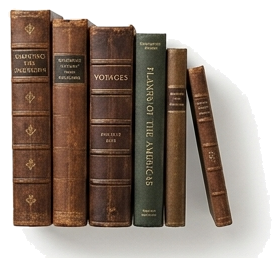
Dangerous Wonder is organized like a reference book because that's what it was always meant to be — a field guide you can wander through, not a search result you consume. Each section is a doorway. Each page is a path. Here is what awaits you:
- Natural World — Animals, ecosystems, and the living planet
- Inventions — The things humans have built and why they matter
- Phenomena — Weather, illusions, and things that defy easy explanation
- Maps & Places — Geography, borders, and the stories hidden in terrain
- Human Body — The most complicated thing you'll ever live inside
- Space — Everything beyond the atmosphere
Wander. Get lost. Follow a footnote to a page you didn't know existed. That's the whole point.
Site Statistics
- Pages published: 743
- Words written: ~1.2 million
- Illustrations and images: 1,106
- Fact boxes: 389
- "Did You Know" boxes: 214
- Years online: 27
- Dollars of venture capital received: 0
- Advertisements served: 0
- Times the site has been nearly lost: 2
- Times the site has been recovered through sheer stubbornness: 2
- Sandwiches researched: 14 (the original 1999 page remains a personal favorite)
- Current editor-in-chief: Marguerite Calef
- Technical lead: Solène Calef-Mitchell
- Longest-serving forum moderator: Priya Sharma (CorvidFan99), 2007–present
- Hosting costs per month: $14.50
How to Explore (and What You Might Find)

Some things on Dangerous Wonder are easy to find. They are on the pages you'd expect, in the sections you'd look in first. But Marguerite and Solène have always believed that a good reference book rewards the careful reader — the one who reads footnotes, who notices the small print, who clicks on things just to see what happens.
There are hidden pages on this site. There are Easter eggs in the source code. There are links that only appear if you look closely at the image captions. There is at least one page that can only be reached by visiting another page at a specific time of year. We are not going to tell you which one.
The best way to explore Dangerous Wonder is the same way you'd explore a used bookstore: slowly, without a list, ready to be surprised. Pick a section that sounds interesting. Read a page. Follow a link. Before you know it, it's 2:00 AM and you're reading about the mating habits of mantis shrimp and you don't remember how you got here. That's not a bug. That's the entire design philosophy.
Welcome. Stay curious. Stay dangerous.
you found the first one. there are eleven more.